
UAFS Local Leads Deliver “Baby Brain Bags” to Mercy Labor & Delivery
Community | Health Education and Human SciencesMay 07, 2026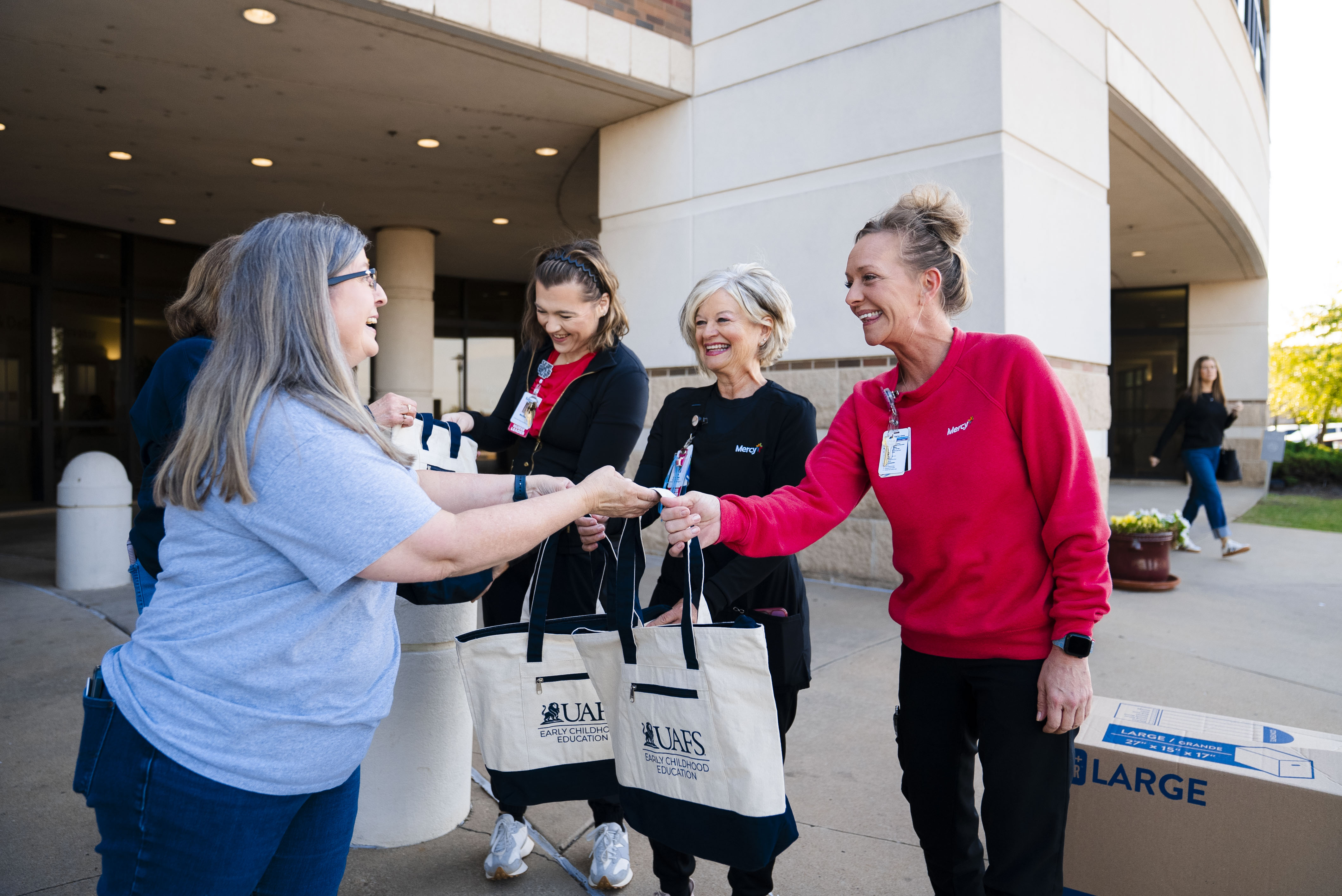
UAFS Early Childhood Education Local Leads team delivered 1,300 “Baby Brain Bags” to Mercy-Fort Smith May 1.
Share on Social Media


Current News Stories
Written By: Tina Alvey Dale
The University of Arkansas-Fort Smith Early Childhood Education Local Leads team delivered 1,300 “Baby Brain Bags” to the labor and delivery department at Mercy-Fort Smith on Friday, May 1, providing materials and guidance designed to support newborns’ brain development.
The bags will be distributed to all infants born at the hospital, giving families tools like as high-contrast visual cards, rattles and cloth baby books, along with information for parents on how everyday interactions support early brain development.
“The most important thing is to be interactive with their children, whether it’s reading or eye contact, lots of talking, get some songs and rhymes in there,” said Corri Brosius, visiting instructor in early childhood education at UAFS. “No one sings to their children anymore. No one says the nursery rhymes.”
UAFS serves as a designated Local Early Childhood Lead organization for Arkansas, operating under a grant funded by the Arkansas Department of Education through Arkansas LEARNS. The initiative aims to strengthen early childhood systems by supporting professional development, coordinating resources, and building partnerships across the region. The Local Leads grant covers Scott and Sebastian counties and focuses on family engagement and school readiness.
Ronnette Haynes, grant coach/outreach coordinator, local lead captain and early childhood advisor, said the Baby Brain Bag project grew from existing efforts to support school readiness.
“My work around school readiness initially began with kindergarten readiness backpacks distributed to local schools,” Haynes said. “While the effort was meaningful, I knew in my heart that addressing these issues at kindergarten entry was still too late for many children.”
After reviewing data, including low third-grade reading scores, Haynes said it became clear that challenges in reading often stem from early language development, which begins at birth.
“If we truly want to support school readiness, intervention must begin earlier and include families as active partners,” she said.
The materials in the bags align with the Arkansas Child Development and Early Learning Standards and emphasize the role of caregivers as a child’s first teacher, encouraging daily interactions such as talking, reading, singing and making eye contact
Student volunteers assembled the bags, with close to 40 Southside students participating over two nights and approximately 20 students from Northside, Brosius said.
The project reflects a broader shift from addressing learning gaps later in childhood to preventing them earlier, Haynes said. By reaching families at birth, the initiative reinforces the message that early experiences play a critical role in long-term learning outcomes.