
Future Educator Finds Comfort in the Uncomfortable
Arts and Sciences | Featured | Research | StudentsSeptember 22, 2026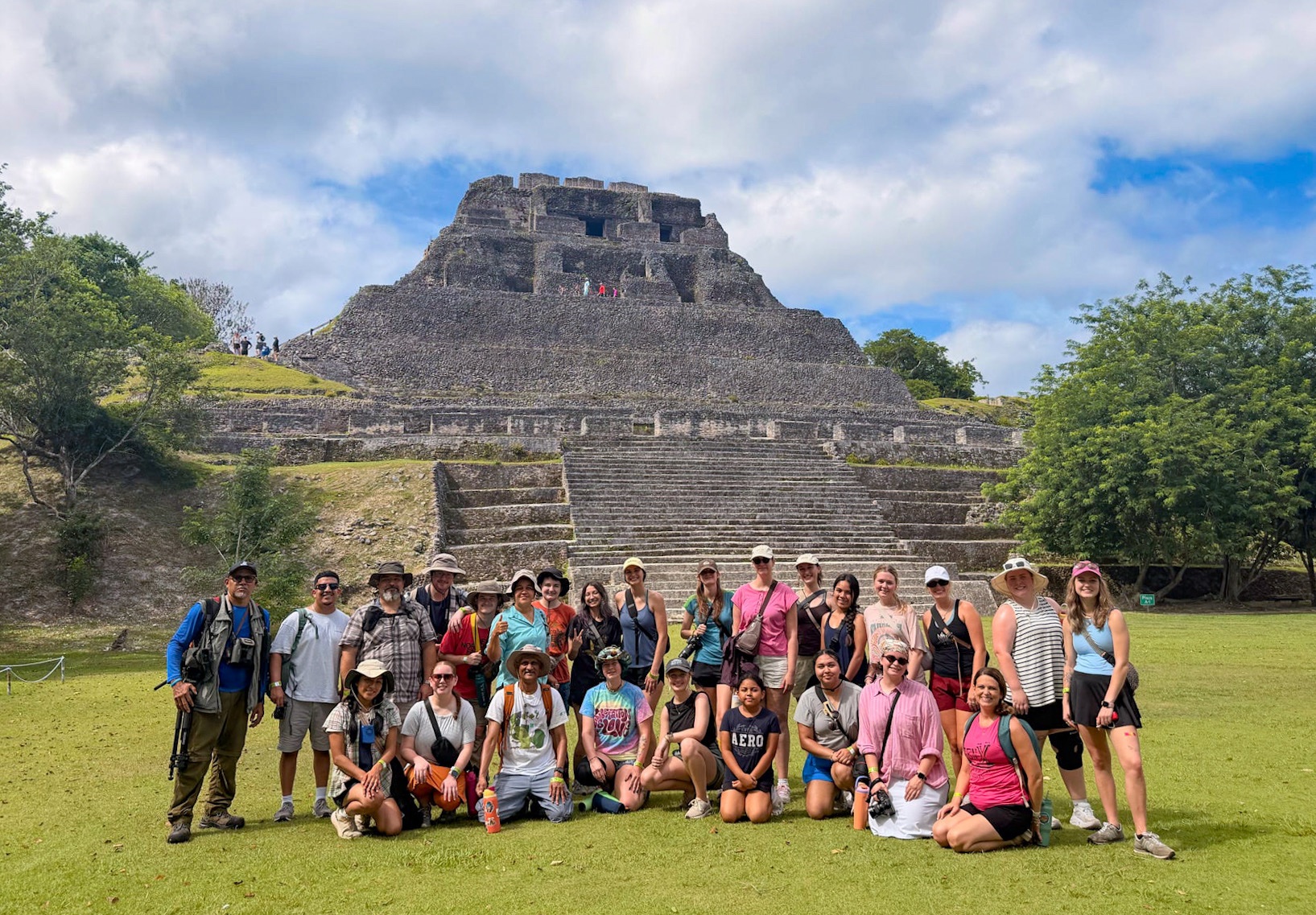
Education and biology students participating in the Maymester study in Belize participated in a many areas of research and activities that will help prepare them for futures in their respective fields.
Share on Social Media


Current News Stories
Written By: Tina Alvey Dale
Olivia Phillips’ Maymester trip to Belize started with a little homesickness, a lot of uncertainty, and a realization that she was probably going to spend more time outdoors than she had planned.
Olivia, a second-semester junior studying elementary education at the University of Arkansas – Fort Smith, had never left the country before. To top that off, she was traveling to Belize, a country known for its biodiversity with mountains, rainforests, jungles, and beaches, and she’s self-described as “really not outdoorsy.”
Then came the hikes.
Some started at 5:30 a.m. Others involved bugs, heat, wildlife, and plenty of activities that were outside Olivia’s comfort zone.
But somewhere between hiking with biology students, visiting a Belizean school and snorkeling above the Belize Barrier Reef, Olivia stopped wondering whether she belonged and started experiencing the trip for the opportunity to see the world and her future classroom a little differently.
“I think Belize helped me grow personally, academically, and professionally,” she said.
The nine-day Belize Maymester brought together students from education and biology for an experience that combined cultural immersion, education, and hands-on fieldwork.
About 30 students initially enrolled in one of the two courses, but a flight cancellation forced the trip to be rescheduled to later in the summer, ultimately leaving 20 students able to attend.
Dr. Ragupathy Kannan, professor of biology, developed the Belize course. He has led 18 trips to the country with students. His course gives biology students firsthand exposure to tropical ecosystems and biodiversity through activities including birdwatching, snorkeling, canoeing, cave tubing, ziplining, and hikes.
Dr. Jason Ortega, assistant professor of biology, also helped with the study program, and students also documented biodiversity through iNaturalist, a citizen-science app.
This year, Dr. Jennifer Shure, assistant professor in the UAFS School of Education, joined the program with her course, Teaching People of Other Cultures, designed to help future educators examine culture, education and teaching outside their familiar surroundings.
For Olivia, the differences between the two groups became part of what made the experience
meaningful. 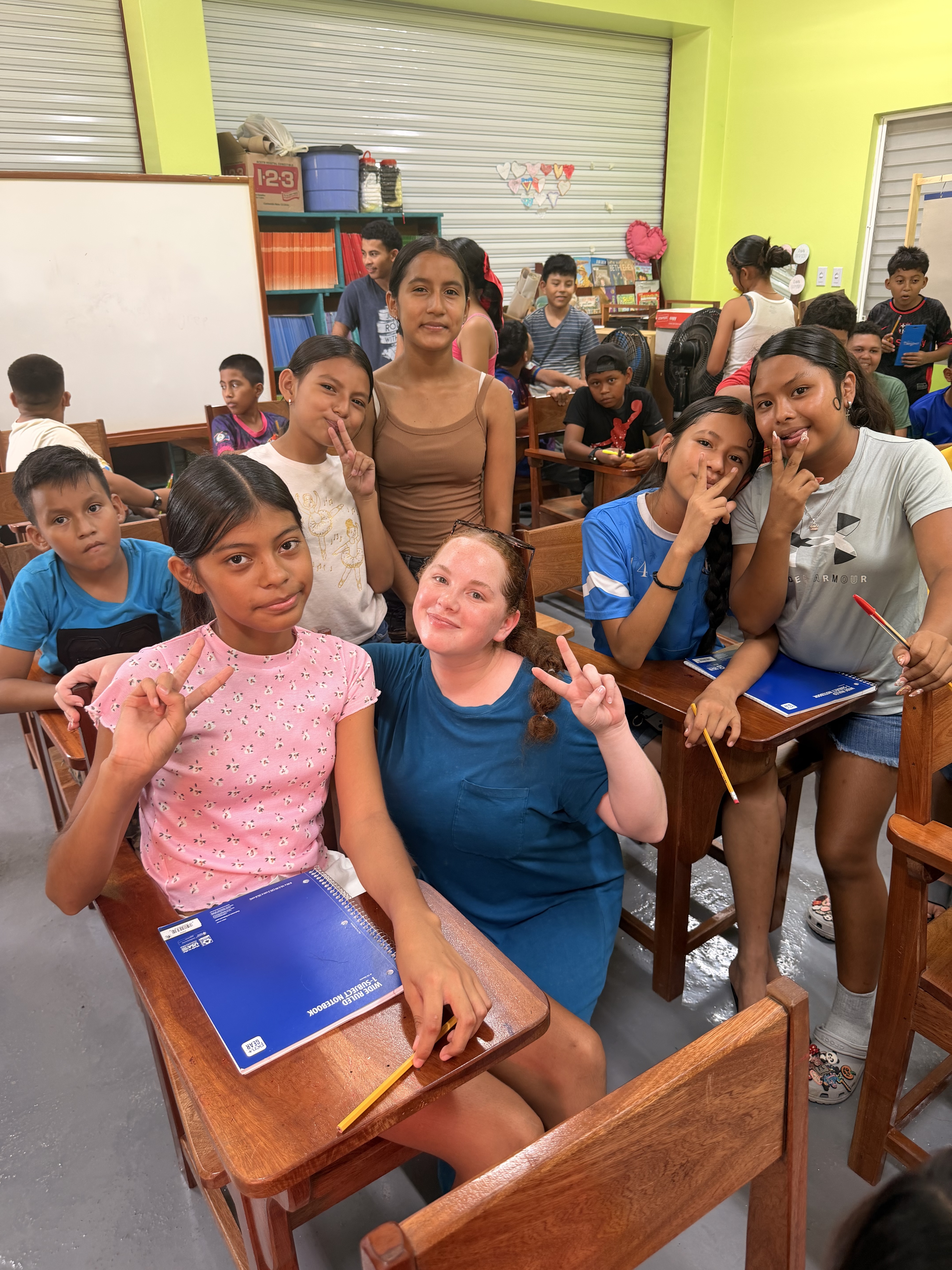
Biology students tended to focus on wildlife, ecosystems, and the natural environment. The education students paid closer attention to schools, children, and learning environments.
Rather than keeping the groups separate, the trip gave them opportunities to see Belize through one another’s eyes.
The education students joined wildlife walks. Biology students visited a Belizean school.
“We were all experiencing Belize together,” Olivia said.
That experience helped Olivia understand people don't always see the same things in the same way, which became particularly clear when she walked into a Belizean school.
Olivia had imagined her future classroom with decorations, themes, and all the details that make a room feel inviting. The Belizean classroom looked different. It had what it needed, but not all the extras she had imagined. There was no air conditioning, just fans.
It made her reconsider what makes a classroom special.
“My students aren't going to remember whether my bulletin board was perfect,” Olivia said. “They're going to remember how I made them feel.”
The experience reminded Olivia of the kind of teacher she wants to become, someone who makes students feel safe, respected, and heard.
“The culture of a classroom isn't created by decorations,” she said. “It's created by the way you treat the people inside of it.”
Shure said experiences like the Belize Maymester can help future teachers better understand how culture shapes students, communities, schools, and learning.
“That kind of experience can help them become more responsive educators and encourages them to examine their own assumptions about teaching and life,” Shure said.
Olivia discovered that she could learn from the biology students around her.
They became excited about plants and animals that she might have otherwise walked past. Their enthusiasm encouraged her to look closer.
For biology students, the trip offered a different kind of learning. Ortega said the experience allows students to see firsthand ecosystems and organisms they had previously encountered primarily through textbooks.
It also introduces them to the demands of fieldwork like waking early to find birds and staying up late to look for insects, reptiles, and amphibians.
That experience can help shape some students’ plans for graduate school or careers in field ecology and conservation.
For Olivia, the impact was more personal.
She arrived in Belize having never traveled outside the United States and unsure of what to expect. She left more willing to say yes to experiences that scared her.
There were hikes she initially didn't think she could handle. There were bugs. There was heat. There was a cave, a waterfall, and a jump into the water with friends.
There was the Belize Barrier Reef, where she remembers looking down into bright blue water and seeing a sea turtle swimming below her.
But perhaps the most meaningful recognition came at the end of the trip, when Shure gave each student a superlative.
Olivia received the “Bloom Where You Are Planted” award.
It was a small reminder of how much had changed.
“I had started the trip homesick and wondering if I belonged,” Olivia said. “I was scared of so many things. And by the end, I was doing things I never thought I would do.”
She came home with a new appreciation for the value of experiencing cultures rather than simply reading about them.
As a future teacher, she said, she wants to remember that every student who enters her classroom will bring experiences and perspectives of their own. She wants to learn their stories.
“I want to be curious. I want to listen,” she said.